
Machine guides / Drilling and processing
Conveyor system
A belt conveyor system moves bulk material continuously on a rubber belt carried by idlers and driven by electric motors. Overland and in-pit conveyors carry ore, coal and aggregates over long distances and can replace a large share of truck haulage on fixed routes.
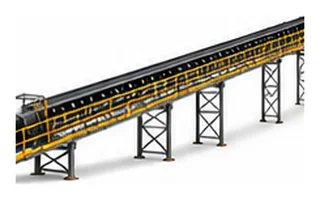
Typical uses
Where it works.
- Overland ore and coal transport
- In-pit crushing and conveying
- Plant, port and stockyard handling
The electric version
What changes when it goes electric.
Conveyors are already electric: their drives are electric motors, and on downhill sections they can generate power. Pairing an in-pit crusher with conveyors is a well-known way to cut truck haulage and diesel use. The trade-off is less flexibility than trucks, because the route is fixed and the system is a large up-front investment.
Before you decide
What decides whether it works on your site.
General guidance only. Every site needs its own technical and financial assessment by qualified engineers.
Route stability
Conveyors pay off where the route stays fixed for years.
Crushing first
Run-of-mine rock usually needs crushing before it can ride a belt.
Power and maintenance
Plan drive power, belt wear, idler replacement and access along the route.
Buyer questions
Questions to answer first.
- What distance and lift does the material travel?
- What tonnage per hour?
- How long will the route stay the same?
How we help
We map the Chinese makers that build it.
Share your answers to these questions and we'll build a checked shortlist of makers, compare what they offer and set up the conversations. We don't sell or certify machines.
Send a requirementRelated machines
Keep exploring.
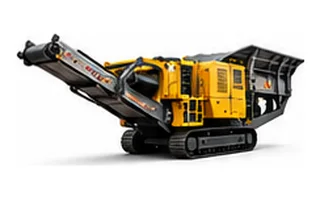
Electric mobile crusher
A mobile crusher is a tracked crushing plant, usually a jaw, cone or impact crusher, that breaks rock, ore or demolition waste into smaller sizes close to where it is dug.
Read the guide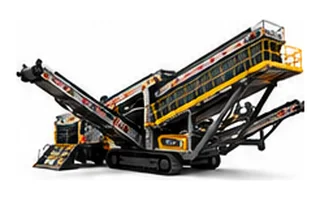
Electric screening plant
A mobile screening plant separates crushed rock, gravel, soil or recycled material into sizes using vibrating screens and conveyors.
Read the guide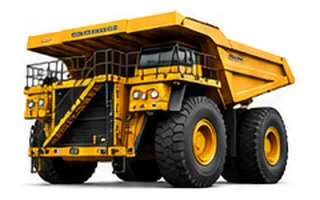
Electric rigid haul truck
A rigid haul truck is the workhorse of open-pit mines: a two-axle truck with a fixed frame and a large dump body that carries ore and waste rock from the loading face to the crusher, stockpile or dump.
Read the guide