
Machine guides / Mining: haulage and loading
Electric rigid haul truck
A rigid haul truck is the workhorse of open-pit mines: a two-axle truck with a fixed frame and a large dump body that carries ore and waste rock from the loading face to the crusher, stockpile or dump. Rigid trucks are built for well-maintained haul roads and very high daily tonnages, and they come in a wide range of payload classes, from mid-size trucks used in quarries to ultra-class trucks in the largest mines.
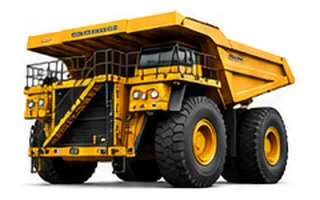
Typical uses
Where it works.
- Hauling ore and waste rock in open-pit mines
- Feeding primary crushers on fixed haul routes
- Large quarries with long, repeated cycles
- Overburden removal in large earthmoving projects
The electric version
What changes when it goes electric.
Battery-electric rigid trucks replace the diesel engine with a battery pack and electric drive motors. Many large rigid trucks already use diesel-electric drive, which makes the step to battery power or to trolley assist (overhead lines on uphill ramps) a natural one. On downhill loaded hauls, regenerative braking can return energy to the battery. Chinese makers now offer battery-electric rigid trucks in several payload classes, and some trucks are designed for battery swapping, where a depleted pack is exchanged for a charged one in minutes.
Before you decide
What decides whether it works on your site.
General guidance only. Every site needs its own technical and financial assessment by qualified engineers.
Haul profile
Distance, gradient and whether the loaded leg runs uphill or downhill decide energy use per cycle, and whether regeneration helps.
Charging or swapping
Shift patterns decide whether trucks can charge at breaks, need high-power fast charging, or suit battery swapping.
Site power
High-power charging needs grid capacity or on-site generation and storage; this is often the longest lead-time item.
Payload and battery weight
Battery mass affects rated payload, tyres and road wear; compare payload per cycle, not just truck class.
Buyer questions
Questions to answer first.
- Which payload class and how many trucks does the fleet need?
- What is the loaded haul profile and the daily operating hours?
- Is there grid capacity for charging, or a plan for on-site power?
- Who services the trucks locally and which parts are stocked?
How we help
We map the Chinese makers that build it.
Share your answers to these questions and we'll build a checked shortlist of makers, compare what they offer and set up the conversations. We don't sell or certify machines.
Send a requirementRelated machines
Keep exploring.
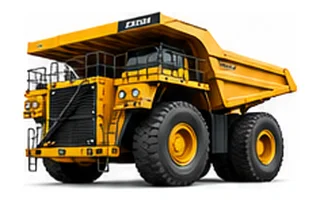
Electric mining dump truck
Mining dump trucks carry blasted rock, ore and overburden away from the face.
Read the guide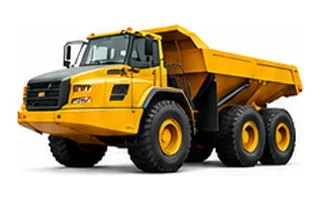
Electric articulated dump truck
An articulated dump truck (ADT) has a front tractor unit and a rear dump body joined by a pivoting hitch, usually with all-wheel drive.
Read the guide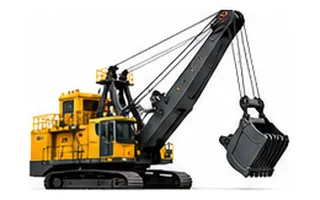
Electric rope shovel
An electric rope shovel is a very large loading machine used in big open-pit mines.
Read the guide